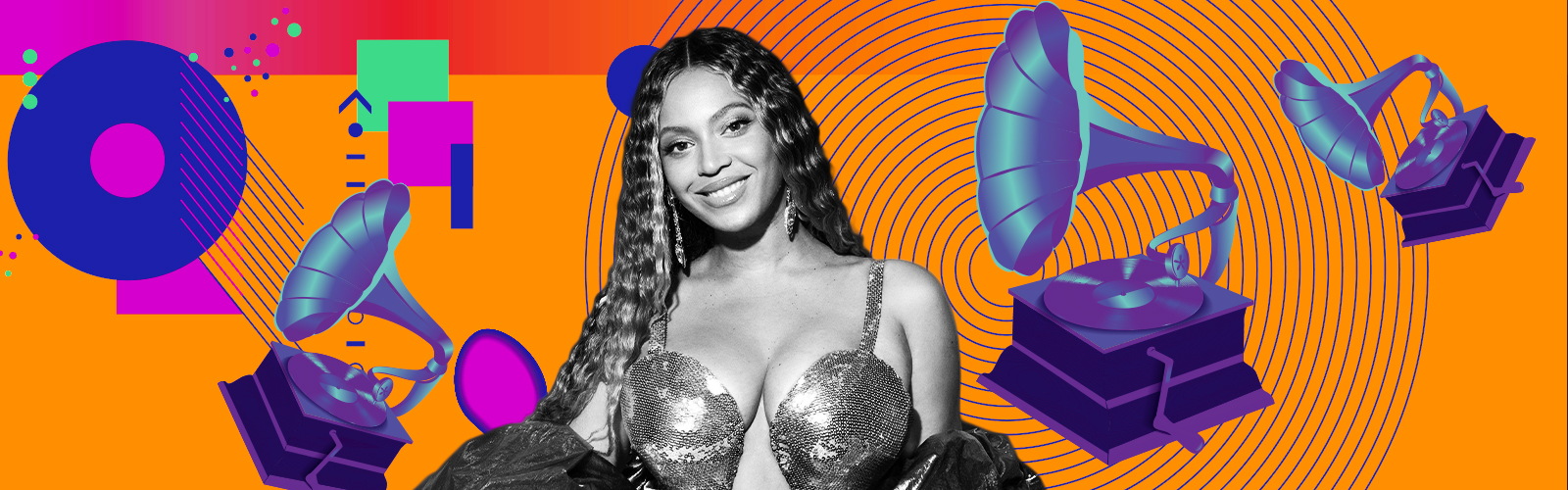
Beyoncé Should Have Won The Grammy For Album Of The Year And It’s Infuriating That She Didn’t

Let’s not waste time, here: the Grammys let us all down by failing to acknowledge Beyoncé’s Renaissance as the Album Of The Year, in favor of the audio equivalent of plain oatmeal. I’m sure Harry Styles is a very nice British boy – distinctive lack of personality aside – but I, and indeed, many, many others fail to see what his album accomplished that Beyoncé’s did not.

Where Styles’ album was a fine example of a middle-of-the-road pop album, taking inspiration from the past 40 years or so of Top 40 radio (I’m putting it nicely – others have argued that it was pale imitation), Renaissance excavated 40 years of Black music history. Beyoncé sought to shine a spotlight on an oft-and-long-overlooked subculture of Black joy and rebellion.

And while the Grammys were certainly happy to make a fuss about her setting the record for most-awarded act ever, shutting her out from Album Of The Year – again – felt like a repudiation, a rejection, of not just Beyoncé’s efforts, but of the validity of the lived experience of the people her album highlighted. It’s a slap in the face.

To add insult to injury, these are the people and this is the scene that has most directly influenced pop music over the past 40 years. All of your faves? They got their swag from queer Black folks. If you ask just about any dance-pop star with a Billboard Hot 100 hit who they were inspired by, you’re going to get the same answers: Britney Spears, Madonna. Well, who inspired Madonna? I’ll wait.

Actually, no I won’t. It was that New York rave culture, where queer Black folks pioneered house and techno, ball culture, and the sampling techniques that permeate modern music today. Look at Sam Smith and Kim Petras winning Best Pop Duo/Group Performance last night. That doesn’t happen without the queer Black community opening the door, at the roots of things, laying the foundation for the branches to flourish.

And Beyoncé, who brought that underground movement to the daylight, went out of her way to acknowledge those contributors to the culture. She put Grace Jones on the album. She nodded to the dozens of collaborators and inspirations for that album in both the liner notes and on her website. As my colleague, Alex Gonzalez, pointed out on Twitter, “Both Harry and Beyoncé noticeably took inspiration from LGBTQ+ aesthetics and culture for their respective album eras… but only one of them actually thanked the queer community.”

And musically, she embraced the breadth and range of those contributions, from disco to neo-soul and everything in between. She displayed versatility and depth and grace and vulnerability and gratitude. She, to quote the kids (who are, again, only quoting Black drag queens), ate and left no crumbs.

In the end, she was paid dust.

Harry’s acceptance speech, oddly enough, inadvertently highlighted just how insultingly tone-deaf this pick really was. “This never happens to people like me,” he said. People like who, Harry? British people? Paul McCartney, Sting, and Adele all have several. Guys who were hand-picked and groomed by some of the biggest producers on the planet to be pop stars from their teens? Hey, have you ever heard of Justin Timberlake?

There is literally no category or tag that you could place on Harry Styles that would put him at a disadvantage in today’s society, let alone at an institution like the Recording Academy, which has had a 100-year history of dropping the ball on honoring Black artists, women, queer artists, or people of color in general at best, and outright racism at worst. Harry is, to the best of anyone’s knowledge, a straight, white, rich dude… the people modern society is set up to serve.

You can’t even blame this on the voting process; in a Variety feature about Academy voters, two anonymous members of this “prestigious” group openly admitted they didn’t vote for Beyoncé “because she always wins.” There was true spite behind this robbery, like the heist in Ocean’s Eleven. It wasn’t just about seeing Harry win – it was about seeing Beyoncé, a Black woman whose commitment to excellence in her craft oozes out of every fiber of her being, who has sacrificed so much to be the best at her craft, who shouldered the burden of representing an entire community in her work… lose.

That is truly heinous.

But, it’s also business as usual in America, where we Black folks are told we have to work twice as hard for half as much. If nothing else, last night’s Grammy result adds one more exhibit to the mountainous pile of evidence for this. It’s all just proof that the Grammys, like most everything else, ain’t really for us – and that’s a shame, because America, and its music, owe us so much.


source https://uproxx.com/pop/beyonce-grammys-2023-album-of-the-year/

Comments

Hip Hop and Music: A Cultural Evolution

Hip Hop and Music: A Cultural Evolution and What Listeners Look For Hip hop is more than just a genre of music; it is a cultural movement that has deeply influenced the world for over four decades. Originating in the South Bronx during the 1970s, hip hop was birthed from the creative expression of marginalized communities. What started as a fusion of DJing, breakdancing, graffiti art and MCing (rapping) quickly became a global phenomenon. Over the years, hip hop has expanded its reach, influencing various aspects of society, from fashion and language to politics and social movements. But what exactly do listeners seek when they tune in to their favorite hip hop tracks? Let’s explore.

The Evolution of Hip Hop Music

The Evolution of Hip Hop Music At its core, hip hop music is built on rhythm and lyricism. Early pioneers like DJ Kool Herc, Grandmaster Flash, and Run-D.M.C. laid the foundation for what we now recognize as hip hop. They mixed disco, funk, and soul beats with rhythmic rapping to create a unique sound. Through the 1980s and 1990s, iconic artists such as Tupac, The Notorious B.I.G., Nas, and Jay-Z further shaped the genre, adding deeper narratives that explored social issues, struggles, and triumphs.
In the 2000s, hip hop saw its golden age evolve into new sub-genres, from Southern hip hop (e.g., OutKast and Lil Wayne) to the rise of trap music (led by artists like Future, Gucci Mane, and Migos). Today, artists continue to experiment with hybrid sounds, blending trap with pop, rock, and electronic music, creating a more diverse landscape for the genre.

What Listeners Look for in Hip Hop Music

What Listeners Look for in Hip Hop Music While the genre has evolved, the heart of hip hop music still beats with certain core elements that listeners continue to seek. Here’s what attracts audiences to hip hop music:

1. Authenticity

One of the most important qualities of hip hop is its authenticity. Listeners are drawn to artists who stay true to themselves, their roots, and their experiences. Whether an artist is rapping about overcoming hardship, life in the streets, or personal triumphs, their genuineness resonates with fans. Authenticity gives hip hop its raw edge, connecting the artist's voice with listeners on a deeply personal level.

2. Lyricism and Wordplay

Hip hop has always been a platform for storytelling, and the craft of lyricism is highly valued. Fans look for clever wordplay, metaphors, punchlines, and deep storytelling in their favorite tracks. Rappers like Kendrick Lamar, J. Cole, and Nas are revered for their intricate lyricism and ability to convey powerful messages through their words. A song with sharp bars, vivid imagery, and emotional depth can elevate a listener’s connection to the music.

3. Beat and Production Quality

The beat is often the first thing people notice in a hip hop song. A catchy, hard-hitting beat can make or break a track, and producers play an integral role in shaping the sound of hip hop music. Producers like Dr. Dre, Kanye West, and Metro Boomin have become household names for their distinctive production styles. From boom-bap beats to trap drums, the instrumental elements are essential in drawing listeners into the rhythm and groove of the song.

4. Innovation and Evolution

Hip hop is known for its constant evolution. Fans of the genre are often on the lookout for artists who push boundaries and experiment with new sounds. This spirit of innovation keeps the genre fresh and exciting. From the rise of auto-tune with artists like T-Pain to the blend of electronic and rap seen with artists like Travis Scott, listeners are eager for new music that challenges the traditional limits of hip hop.

5. Vibe and Energy

Hip hop isn’t just about the lyrics or the beat—it’s also about the energy the music brings. Whether it’s a party anthem, an introspective track, or a political statement, the vibe and energy of a song play a crucial role in how it resonates with fans. Artists like Drake, Cardi B, and Lil Uzi Vert have mastered the art of creating tracks that make listeners feel a certain way, whether it’s hyped up, laid back, or reflective.

6. Relatability and Emotional Connection

Hip hop has always been an outlet for self-expression and commentary on life experiences. Because of this, listeners often gravitate toward songs that reflect their own lives, struggles, and aspirations. Whether it’s a song about the challenges of growing up in a tough environment, the celebration of personal success, or the experience of love and heartbreak, hip hop has the unique ability to connect emotionally with audiences. Fans often seek songs that speak to their individual journeys and provide comfort, validation, or empowerment.

The Global Reach of Hip Hop

What was once confined to the streets of New York City has now become a global cultural force. From Tokyo to Paris, hip hop has spread across continents, influencing artists and listeners worldwide. In recent years, artists from outside the U.S. have brought their own cultural influences to the genre, blending hip hop with local sounds, languages, and traditions. The genre’s global reach is a testament to its universal themes of struggle, self-expression, and empowerment.

Conclusion

Hip hop music is an ever-evolving cultural powerhouse that has grown from a localized subculture into a global sensation. The authenticity, lyricism, production quality, innovation, energy, and emotional depth are the main ingredients that attract listeners to hip hop. While the genre continues to change, its core values remain consistent—offering a space for self-expression, storytelling, and connection. As hip hop continues to evolve, it will undoubtedly remain a major force in shaping the future of music. Whether you’re a fan of classic boom-bap or modern trap, hip hop’s diverse range offers something for everyone, proving that its cultural impact is here to stay.