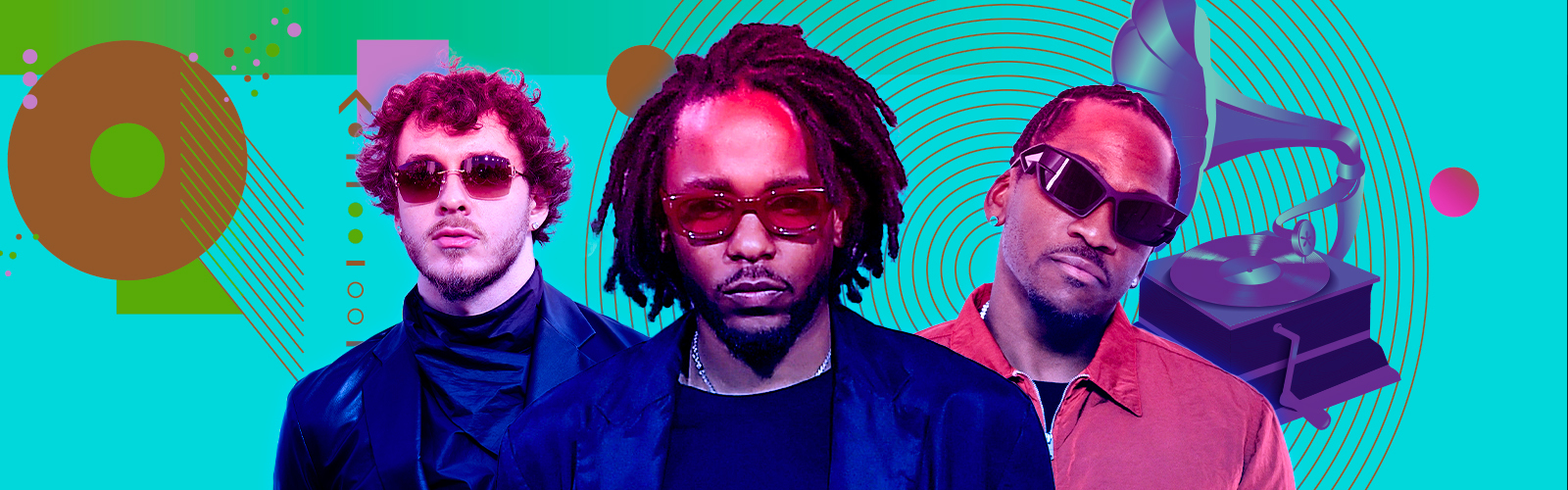
First things first, let’s get this out of the way: The Grammys have a fraught and sordid history with hip-hop. This much we know and there’s little reason to expect it to change in the near future, even with the adjustments the Grammys have made in recent years. But there is reason to hope, which we’ll get into below.
Now that that’s taken care of, let’s do some predictions! We’ve already done the Big Four awards, but here, we’ll concentrate on rap. Depending on where you stand, this year’s rap nominations are either the most forward-thinking the Recording Academy voters have put together in ages (I mean, GloRilla’s in there! Future and Gunna are nominated for stuff! It’s fun!), or it’s a thin field with the usual middle-of-the-road pandering (I personally like Jack Harlow, but I’m told rap fans aren’t rooting for him. Then there’s DJ Khaled…).
Either way, it should make for an interesting show full of surprises. Will Grammy voters (who tend to skew Gen-X) finally acknowledge the modern sounds of the genre? Will perennial favorite Kendrick Lamar clean up? Will the Grammys’ ugly history with female rap artists rear its head again? We’ll find out Sunday, February 5 (Here’s how to watch the show and here’s the full list of this year’s nominees) but for now, let’s pray for those parlays, for which I will warn you now, I bear no responsibility.
Best Rap Performance
DJ Khaled Featuring Rick Ross, Lil Wayne, Jay-Z, John Legend & Fridayy — “God Did”
Doja Cat — “Vegas”
Gunna & Future Featuring Young Thug — “Pushin P”
Hitkidd & Glorilla — “F.N.F. (Let’s Go)”
Kendrick Lamar — “The Heart Part 5”
Who will win: Kendrick Lamar — “The Heart Part 5”
Who should win: Doja Cat — “Vegas”
Kendrick Lamar is an award-show favorite and his Big Steppers table setter, set to a smooth interpolation of Marvin Gaye’s “I Want You,” is a classic example of his primary preoccupations. He addresses the “culture,” expresses sympathy for the canceled, and muses on the destructive cycles and systems of modern-day America. The thing is, he’s done all this before, and while I hesitate to say the schtick is wearing thin, the series of caricatures Kendrick samples through in the face-morphing visual has aged poorly enough to put off much of the Recording Academy voting base.
On the other hand, Doja Cat, fresh off the successes of her versatile third album Planet Her, demonstrates she’s got plenty more creative space to stretch out in — and she’s just getting started. A venomous excoriation of a philandering romantic partner, “Vegas” catches Cat traipsing over a slick reimagining of Big Mama Thornton’s original version of “Hound Dog” by Shonka Dukureh — a sly reclamation of a musical legacy that reframes the titular ne’er-do-well, turning the spotlight on the subject of the film from which this song hails (and his ilk).
Best Melodic Rap Performance
DJ Khaled Featuring Future & SZA — “Beautiful”
Future Featuring Drake & Tems — “Wait for U”
Jack Harlow — “First Class”
Kendrick Lamar Featuring Blxst & Amanda Reifer — “Die Hard”
Latto — “Big Energy (Live)”
Who will win: Jack Harlow — “First Class”
Who should win: Latto — “Big Energy (Live)”
Jack Harlow’s gonna win by virtue of two facts: One, this song was borderline inescapable for the better part of a year after its release, and two, … well, you know. The Grammys have managed to avoid embarrassing themselves in that way in the rap categories since the Macklemore debacle in 2015, but then again, they haven’t had many opportunities since (the closest they came was Adele rejecting her win over Beyoncé for Lemonade).
Still, if they really want to make up for past mistakes, they can start by acknowledging that they snubbed Doja and Megan Thee Stallion in the performance and song categories and women overall for Best Rap Album. Yuck. If there was any song that challenged “First Class” for having a chokehold on your eardrums in 2022, it was “Big Energy,” which was also Latto’s breakout moment (even if she had already been around for a while).
Best Rap Song
DJ Khaled — “God Did” Feat. Rick Ross, Lil Wayne, Jay-Z, John Legend & Fridayy
Future Featuring Drake & Tems — “Wait for U”
Gunna & Future Featuring Young Thug — “Pushin P”
Jack Harlow Featuring Drake — “Churchill Downs”
Kendrick Lamar — “The Heart Part 5”
Who will win: Kendrick Lamar — “The Heart Part 5”
Who should win: DJ Khaled — “God Did” Feat. Rick Ross, Lil Wayne, Jay-Z, John Legend & Fridayy
So, like my colleague Derrick did in the Big Four list, I must begin here with a disclaimer. Best Rap Song is considered “A Songwriter(s) Award” by the Recording Academy. This means that it’s (ostensibly) awarded strictly on the technical aspects of the writing/production, rather than the vocal performance of the rapper(s). As we all know, good delivery can make a mediocre bar sound like the illest words ever written, while the transverse is also true. With that said, I looked at the lyrics of each song, combined with other stuff like sample selection. Ultimately, it’s still entirely subjective based on my own tastes.
From that standpoint, I think Jay’s peak on “God Did” overshadows Kendrick’s consistency on “The Heart.” While “God Did” on the whole is mostly a collection of fairly straightforward flexes from Jay’s co-stars, once his verse starts, it’s his song, relegating everyone else to background roles. Not only does he lay out his reasoning for “what the stove did,” but by the end of the verse, he’s got even the most staunch law-and-order conservative starting to agree with his choices, no matter how self-destructive they might have been.
What other verse — not song, verse — was getting breakdowns on MSNBC or dominating the Twitter discussion for days after its release? Jay reaffirmed his GOAT status already, a Grammy win would just seal the deal.
Best Rap Album
DJ Khaled — God Did
Future — I Never Liked You
Jack Harlow — Come Home The Kids Miss You
Kendrick Lamar — Mr. Morale & The Big Steppers
Pusha T — It’s Almost Dry
Who will win: Kendrick Lamar — Mr. Morale & The Big Steppers
Who should win: Future — I Never Liked You
Don’t kill me! Look, it breaks my homer heart to give anything the nod over my Compton countryman, but from my perspective, the best album has to be the most consistent, the most committed to the bit. To quote a bit of secondhand writing advice from one of my esteemed peers, all the sentences in a piece should aim in the same direction, and every single bar on Future’s album does that.
While Kendrick gets credit for the ambition of his fifth and final project for TDE, it’s a little too disjointed, too directionless, and too difficult to listen to straight through. Meanwhile, Future has gone for over a decade and a half as one of rap’s most esteemed yet uncelebrated cult personalities; a genre unto himself, his sole win was for a feature on Jay Rock’s “King’s Dead” and it was a tie with Anderson .Paak’s “Bubblin'” (again, the Grammys are not known for making the best choices when it comes to rap; also nominated in 2019 were Drake’s “Nice For What” and Travis Scott’s “Sicko Mode”).
I Never Liked You offers exactly what it says on the tin, but it’s also Future at his best, stepping up his lyricism, curating some of his most effective beats choices, and delivering the consistency that has kept him at the top of the charts since his legendary three-mixtape run in 2015. Breaking new ground is cool, experimentation is fine, and pushing boundaries is always welcome, but sometimes, you just want dope beats, dope rhymes, and a signature Drake feature. The streets love I Never Liked You; for once, the Grammys can align with the people’s champ if they give it the hardware it deserves.
Find the full list of 2023 Grammy nominees here.
Some artists covered here are Warner Music artists. Uproxx is an independent subsidiary of Warner Music Group.
source https://uproxx.com/music/grammys-2023-predictions-who-will-win-should-win-rap-awards/
Comments
Post a Comment