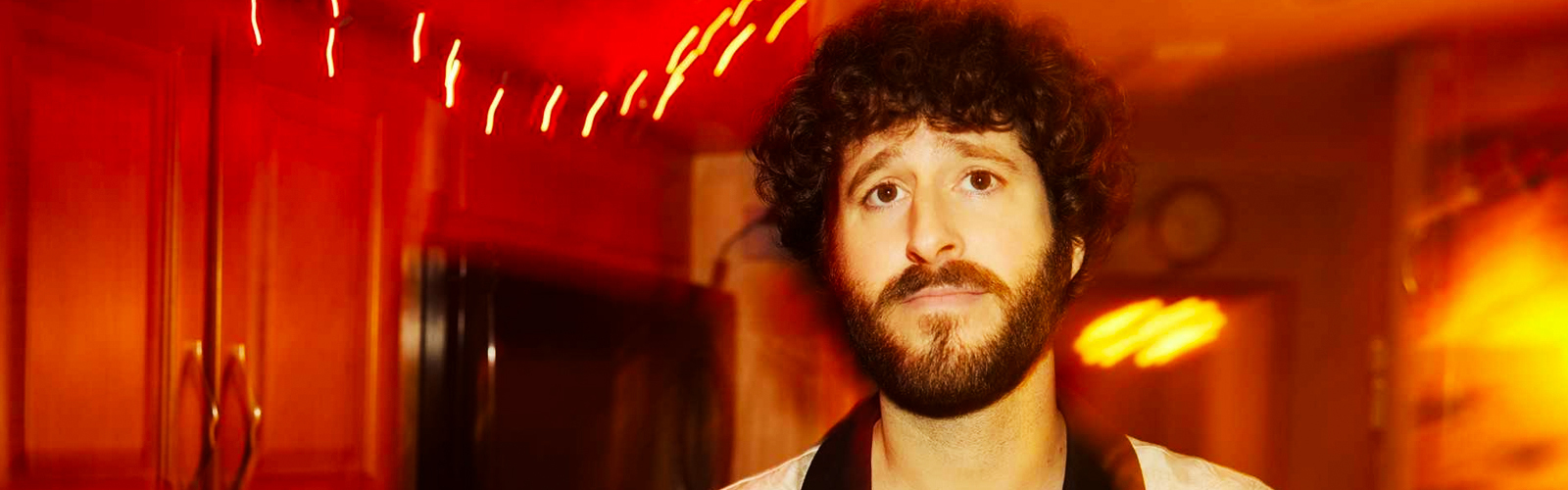
FX’s hip-hop high comedy Dave returned this week in explosive fashion with a double-episode premiere that proved its creator and protagonist’s cringey comedic edge wasn’t dulled by the time away. The brainchild of David Burd — better known to hip-hop fans as the humorous meta-rapper Lil Dicky — Dave follows its titular aspiring rap star as he pursues fame, avoids the pitfalls of being an awkward white dude participating in a Black art form, and this season, looks for love on the road in the wake of his for-real-this-time breakup with ex-flame Ally.
The comedy in Dave derives from Burd’s heightened, hyper-anxious portrayal of a character who is, essentially, himself with, as he put it in a conversation via Zoom, less “social tact.” The Dave of the show often betrays a lack of common sense and an overabundance of ego. Yet, he’s also deeply insecure and selfish, causing him to ignore or downplay his friends’ and family’s concerns until they blow up in his face. Keeping him from being completely unlikable is the core of his needing to be liked — and generally learning his lessons by the episode’s end.
Season three finds Dave in the middle of his first-ever tour, playing undersold dive bars and shooting music videos at his parents’ house in Philadelphia. His concerns — finding a meaningful human connection amidst a parade of fame-induced one-night stands while dodging STDS, and reconnecting with his high school crush by casting her in his video about how she broke his heart — are true-to-life, because they come from the real Lil Dicky’s own stories. But he turns up both the humor and the humiliation to borderline painful levels; you won’t know whether you’ll die from laughing yourself sick or secondhand embarrassment.
It’s all in good fun, though, and the heart of the show remains Dave’s camaraderie with friends like Mike, Elz, and GaTa, while Emma gets a newly pronounced role and a slew of guest stars from across the rap world continue to make hilarious cameos of their own. Dave graciously broke down how he toes the line with his semiautobiographical comedy, incorporates his real-life music into the show to keep fans sated, and which of his guest stars was the funniest so far. Oh, and we played “f*ck, marry, kill” with a trio of his fellow white rappers. He’s a good sport.
In your previous seasons, you’ve kind of backloaded the music. This time, you sort of front-loaded the music. The first two episodes open with music videos, and then the third has an extended musical sequence, where you’re recording. Why did you want to lead off with more music?
I don’t know if that was necessarily by design. I think it just happened that way, and I wasn’t thinking, “We’re going to front-load this thing with music.” I think there’s just, in general, more new music, even as it goes on. By the end of the season, there’s even more music. I think I just happen to be in a position where I record a lot of music in between seasons. Some of it was recorded without thinking, “Will this go in the show?” But then when it’s time for the show to need something, I think, “Well, what do I have that I’ve recorded that could work?” And sometimes, I will record things just for the show.
But I just know that my fans are starving for music. I’m well aware of that. And the show takes up so much of my time that I didn’t want people to think that I’m just an actor playing a rapper now. I just want to remind people that I do make music. And I love music, and I think it’s really cool and unique to the show. And I don’t think any other show could do that.
The music does a lot of the heavy lifting, especially the music video in episode two. It was that perfect cringey level of like, “Okay, he’s riding the line.” Where do you find that line between making Dave relatable and just making him look like a jerk in that episode two climax?
I never want to be on my high horse being like, “Poor me.” I had romantic trauma in the past, and I’m just the ultimate victim all episode. And I think that life is complex, and there are times when there are certain things… I really was supposed to go to a dance with a girl, and then the guy showed up. And then I was the 33rd person there. That really happened to me.
I wanted to make a song that felt nostalgic of a period for a lot of people my age — with AIM [AOL Instant Messenger] and high school and that type of journey. And I also wanted to show a different side, which is the fast-forward 15 years, and this guy’s become a famous rapper. He’s trying to create something out of it, but he is still grappling with all the deep-seated emotions that occur.
I wanted the audience to think, “Oh, Dave’s in the right. Dave’s in the right. She’s in the wrong. She’s in wrong,” and then realize, “Wait, there’s more to it.” And there’s varied perspectives in life. And to just be locked into one perspective, you might miss something. And I think that’s a beautiful part of humanity and a beautiful part of the show.
Do you think this heightened version of Lil Dicky, who exists on the show, would’ve been able to achieve the same level of success as the real Lil Dicky with the way that he responds to things and the crazy stuff that happens to him?
No. I think I’m, in reality, at the right level that a human being should be. Because I still have all the confidence that the character has in the show. I just think I, very much, adhere to social tact, whereas the character in the show, for the sake of comedy most of the time, will take it to a degree well beyond what I would ever do in real life. So I think if I went into record label meetings or whatever saying the same stuff that the character does in the show, I don’t think that the meetings would’ve gone as well.
And also, good for you, you didn’t break Kareem’s leg. Because I know you’re a big hoop fan. I’ve seen you at the celebrity games out here in LA. Would you have wanted to be in the White Men Can’t Jump remake?
Well, I wouldn’t have had time to… And no. Yeah, I just was making my show, and no. For me to be in a basketball movie, I would have to really dedicate my life to the game. If I’m going to be in a full-length motion picture about basketball, I would just care so much about just the footage of me, and that would require dedicating my life to the game. And I don’t think I can do that right now.
Speaking of Jack Harlow… F*ck, Marry Kill: Jack Harlow, G-Eazy, Macklemore.
Probably fuck G-Eazy, marry Macklemore, and kill Harlow.
Speaking of rappers who’ve been on the show, who is the funniest rapper you’ve had on the show to date?
Man, Rick Ross is pretty funny. I’m thinking. I’m thinking. There’s been so many. There’s people that aren’t even named that are coming this season that are so funny. Let’s say, Rick Ross. He was making a lot of jokes up from off the top of his head in our scenes.
I know you do a lot of interviews. I do a lot of interviews. We get sick and tired of hearing the same questions over and over again, both of us. If you were doing the interview, what’s the one question you would want to ask yourself that you would want to talk about?
I’m thinking. I don’t know. “Do you think GaTa deserves every award on the planet?” And I would say, “Yeah.”
I actually got to do an interview with GaTa before, a couple years ago, and he’s just the nicest guy in the world… You guys deserve the success you’ve earned. Last question: What is the one thing you hope people learn from this season? If there’s a thesis statement of the season, what would it be?
Honestly, I have an answer to that question, but it’s the type of answer that I would want to give after people have seen all 10 episodes. Answering that question now kind of gives away but just know we’re headed somewhere. And I think people will be surprised where it goes.
source https://uproxx.com/music/lil-dicky-interview-dave-season-3/
Comments
Post a Comment