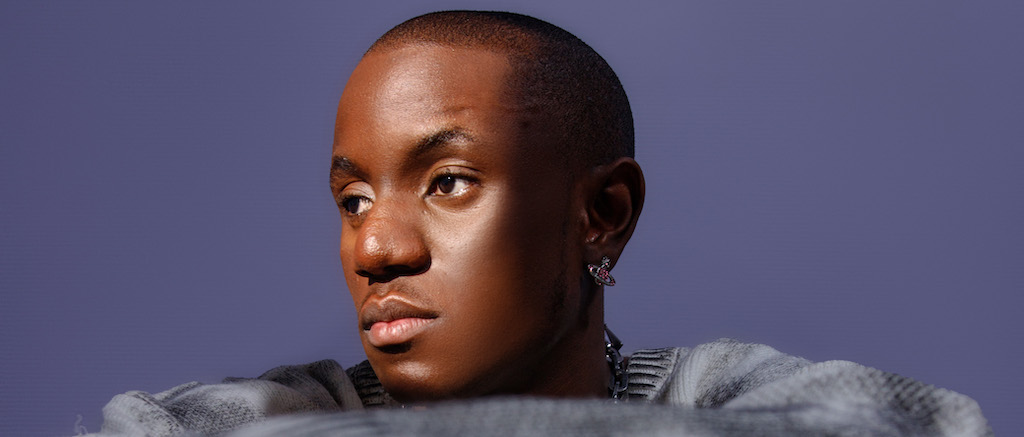
For many, their first experience with Nigerian afrobeats singer Victony, born Anthony Ebuka Victor, came with the growing hit song “Soweto.” As of today, that record has three versions: the original, a remix with Don Toliver and Rema, and a remix with Omah Lay, which altogether, speak to the song sweeping virality thanks to trends on TikTok and more. However, for others, especially those entrenched in the afrobeats space, Victony is a name they’ve seen and heard for a couple of years.
His second EP Outlaw, where “Soweto” is housed, was released last summer following celebrated collaborations with Burna Boy (“Different Size”) and Mayorkun (“Holy Father”). These records aren’t pedestrian releases either, no, they found extended life and were undeniably popular with fans of the genre and even to those who weren’t its most loyal followers.
This is one of my favorite aspects of today’s afrobeats space. Especially over the last half-decade, the genre has been seen in more of a mainstream light than ever. Records have been graced with the “song of the summer” title, claimed high positions on the Billboard singles chart, reached gold and platinum status, and been present on award-winning projects. In short, afrobeats is hot right now.
The same could be said for Victony. In a matter of just over 12 months, Victony found himself as a worthy member of afrobeats’ new class of rising stars. What makes it more impressive is prior to 2020, Victony had no desire to be a singer.
“All I wanted to do was rap,” Victony, who is just 22 years old, says over a Zoom call. “In my teenage years, I started listening to Drake and Kendrick Lamar, a lot of rap stuff just trying to imitate what they were doing.” Victony just like many other musicians at this time, made use of the pandemic as an opportunity to explore this sound and try new things. “I tried out the singing thing and seeing it blow up was pretty interesting,” he says. “It gave me the confidence to keep on exploring and do stuff without limit.”
The result of that was his 2020 debut EP Saturn, a six-track release with a lone feature from Falz on the highlight track “Maria.” “The reception was amazing, the people liked it,” Victony recalls of this project’s release. “I decided to do more singing. That gave me the confidence to work in the afrobeats space and find comfortable ground and just build on that.”
That desire to continue his foray into afrobeats was almost cut short thanks to a tragic accident that left him in a wheelchair for months. Though Victony survived the crash, his close friend Doyin was killed as a result of it. It proved to be an extremely dark time for the singer, and he credits his supporters, from his family to his friends to his fans, for aiding his recovery.
“They reached out, and that just kept me going,” he recalls. “My family, friends, and fans being around to encourage me, just knowing I have people gave me the strength to overcome [those] dark times.”
It didn’t take long for Victony to reach a higher status and become more recognizable in afrobeats. “Holy Father” with Mayorkun arrived the year after Saturn, and in 2022, he teamed with afrobeats heavyweight Burna Boy for “Different Size.” Both records did wonders for Victony, and in the singer’s opinion, these opportunities came as a result of his most unique assets: his striking voice and crafty pen.
“My voice, I feel, is really unique,” he says. “That’s one thing that was really striking on the ‘Holy Father’ song. Once it comes on, you’re like, ‘Who’s this?’” As for his pen, Victony believes its sharpness is what helped him land a feature on “Different Size.” “The way I craft my words together is pretty unique,” he notes. “It’s really refreshing to hear to on a song like ‘Different Size.’ I feel like that’s what made Burna reach out to me.”
The success of “Holy Father” and “Different Size” bookend the release of Victony’s sophomore project, Outlaw. Its seven songs make for a much more refined body of work compared to Saturn. “What I wanted to achieve with the Outlaw EP is to show people that I’d finally gotten really comfortable with the genre and found my space and my unique sound,” he says.
May it be the sweet-talking and love-swept “Chop & Slide,” or the high-spirited “Jolene,” or the amapiano-leaning “Apollo,” Outlaw presented the very best of Victony. These undeniably strong records, though they support and reaffirm Victony’s talents, they did sit behind the success of “Soweto,” the penultimate and breakout track on Outlaw.
More than six months after the song’s release, “Soweto” was an undeniable viral hit thanks to the powers of social media. The song was due for a remix and Victony had plenty of candidates that were suitable for it. The first remix was initially supposed to feature Nigerian singers CKay and Omah Lay. However, Victony was able to put together a version with Rema, a Nigerian singer who is a growing star in his own right, and Don Toliver, an addition that would give “Soweto” more appeal in the States.
Still, Victony had a plan for the previous remix that he has somewhat been able to put into action. “We had all verses in and I thought we might release everything at different points just to give the song some sort of longevity,” he reveals. Though the verses have been teased in some manner, Victony does believe that the remixes will all see the light of day soon. “A lot of people really like Omah Lay’s verse on TikTok and Twitter,” he says. “On all my socials, people hit me daily telling me that I need to put it out. If they still want it, yeah definitely, I’ll release it.” True to his word, Victony would release Omah Lay’s remix of “Soweto” days after our interview.
One record that may see the light of day is the version of “Chop & Slide” with Burna Boy. A preview of that record made its way online which somewhat ruined the plans Victony had for it. “People weren’t supposed to know that Burna was on the song,” he admits. “That kind of put me in a very tight position. I can’t really guarantee what plans we have for the ‘Chop & Slide’ remix, but we’re definitely on it. Everybody wants Burna Boy on the song right now.”
It’s been just over two years since Victony took on the afrobeats world, and in that time he’s achieved great success, worked with top talent, and pushed his name to the masses. The limits Victony once hoped to break through are miles behind him and his newfound space in afrobeats is vast enough to continue his current operation without interruption while also giving him the room to try new things and achieve new goals, something he hopes to accomplish on his third project.
“This year, what I want to do is come in and solidify my identity, I really want to do that,” he says. “Over time, we’ve been working on some really unique stuff that will be new to the game and it’s gonna solidify the Victony name and establish a stronger presence.” There’s strength in numbers and Victony continues to prove that with each record and each accolade, but most importantly, there’s strength in having no limits towards what can be accomplished. Victony is proving that now with “Soweto” and it’s only a matter of time until he does it again with a future release.
source https://uproxx.com/music/victony-interview-soweto/
Comments
Post a Comment