Video Has Emerged Of Chris Brown And Usher Seemingly Arguing At A Party As Rumors Of An Altercation Swirl
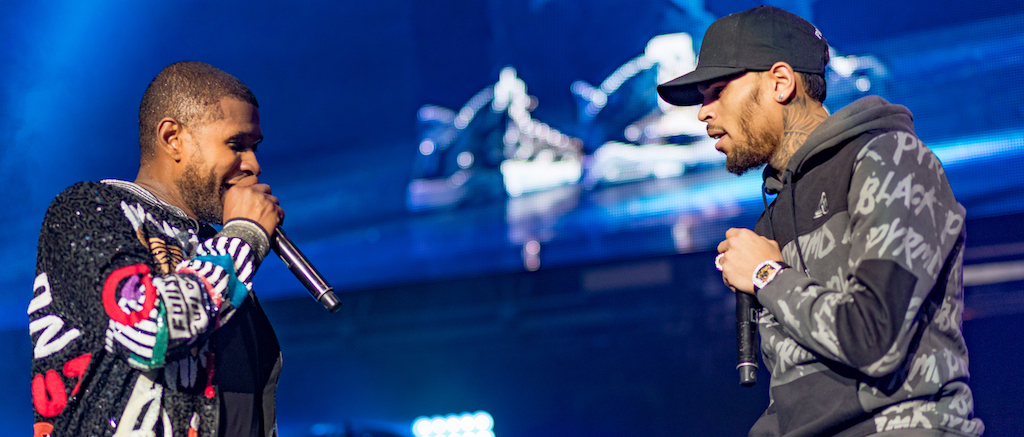
Chris Brown turned 34 on Friday, May 5, and it appears controversy is following him into yet another year of his life. Reports and rumors are surfacing online that Brown got into a physical altercation with Usher at his birthday party.
Hollywood Unlocked posted this morning, May 6, that Brown’s party at Skate Rock City in Las Vegas “went downhill” when Brown acted “disrespectful” toward actor, creative director, and singer Teyana Taylor.
Hollywood Unlocked continued:
“The source explained that Chris Brown was noticeably ‘intoxicated’ when he initially approached her. A few guests and even Usher tried to intervene and calm everyone down. However, at some point during all the commotion, Chris Brown allegedly called Usher a ‘coward’ and left the venue.
The drama spilled over outside and onto Chris Brown’s bus as Usher followed behind to talk to the ‘Run It’ artist. Shockingly, that’s when things went completely left, with Chris Brown and his crew allegedly jumping the legendary R&B singer. The insider went on to say that the alleged beatdown was so bad that it left Usher with a ‘bloodied nose.’ Now, neither of the guys nor Taylor have spoken out to deny or clarify this report.”
The rumor was mostly met with skepticism online, but TMZ added more legitimacy to it this afternoon by sharing footage of Brown appearing to yell toward Taylor and Usher stepping in. The outlet said that the exchange “apparently led to some sort of scuffle that got violent outside.”
Per TMZ, Brown “was attempting to talk to” Taylor, but she was “ignoring him,” which an anonymous source relayed “pissed Chris off, and he started to yell at her, and that’s when Usher intervened and tried to calm him down.”
The TMZ report continued to echo was Hollywood Unlocked initially claimed:
“We’re told Chris wasn’t having it, cursing at Usher and Teyana — but then, mostly focusing his anger directly at Usher. Eventually, our sources say Chris told his crew they were leaving and they exited the facility. We’re told Usher took off his skates and went after them.
Our eyewitness — who says they were present for this — tells us they saw Usher go behind a string of charter buses that were parked in the lot … where Chris and his crew were at. We’re told a short time later, Usher emerged with what appeared to be a bloody nose.”
People online are unsurprisingly confused and trying to decide what to believe. Check out some of the reactions below.
Fighting a man because he checked you for being disrespectful to a woman is sad. It’s also how many of you act on this app every single day. pic.twitter.com/kxvXTNMnwm
— Gerrick Kennedy (@GerrickKennedy) May 6, 2023
I refuse to believe anybody jumped Usher. That man is National Treasure and gives his heart to so fucking many in this industry — including folks who don’t deserve that kindness. pic.twitter.com/kpvQXS3mFe
— Gerrick Kennedy (@GerrickKennedy) May 6, 2023
Chris Brown and Usher this was not the Verzuz we wanted pic.twitter.com/Zpxy5mznzL
— Sunny
(@SunnyBunny_54) May 6, 2023
Uhhh, Chris Brown really fought Usher at the birthday party Usher threw for him?! Tell me that’s not true. pic.twitter.com/zNdKC6ocyC
— Will Smith Slapped Me (@AshleyShyMiller) May 6, 2023
Usher, Mario and Bow celebrating Chris Brown birthday
pic.twitter.com/ApdFEDNWmh
— Neesh (@YerdMe_CMB) May 6, 2023
I randomly ended up at Chris Brown's bday party last night and Usher sang him happy birthday. pic.twitter.com/Y9H70yp15S
— NigelDPresents (@NigelDPresents) May 6, 2023
All I know is Usher put together Chris Brown's bday party, was smiling and skating all night. Sang a quick Happy Bday to CB and they both walked out the same time with zero issues. I can only speak on what took place inside the party.
— NigelDPresents (@NigelDPresents) May 6, 2023
Now why they saying Chris Brown jumped Usher?! pic.twitter.com/eo5wg7K0fE
— Her. (@JusMeRae) May 6, 2023
hearing the news that Chris Brown jumped Usher pic.twitter.com/OlMYVj67AC
— Addyssey
(@Uchihaddy) May 6, 2023
if a single hair is out of place on usher head. chris brown yellow ass gotta see me!!! pic.twitter.com/W0AHjYrbVA
— muse. (@j0vintage) May 6, 2023
That Chris Brown and Usher story gotta be fake cuz ain’t no way…. pic.twitter.com/E7cy2JQTYl
— Steve? (@DwayneJay) May 6, 2023
It was cool when Chris Brown was beating up on them girls but the mere rumor of him touching Usher got y’all rolling out the guillotine. Lmao fuck y’all
— Air Mattress Maddy (@xoxotaye) May 6, 2023
Teyana Taylor no longer follows Chris Brown on IG. It’s definitely some truth to that story about Chris Brown fighting Usher pic.twitter.com/stt1ctoE1E
— Chris (@chrisloves93) May 6, 2023
These Usher and Chris Brown rumours better not be true
pic.twitter.com/HDa5yG79ZS
— Sherman Hemsley

(@Weso3K) May 6, 2023
Imma need video footage to believe Chris Brown and Usher got into a fight and even then I won’t believe it
— 500
(@Kameron_Hay) May 6, 2023
I'm not believing Chris Brown would go out of his way to get Usher jumped until I see it in 4k quality
— Ahmed/The Ears/IG: BigBizTheGod
(@big_business_) May 6, 2023
source https://uproxx.com/music/chris-brown-usher-fight-arguing-rumors-video/
Comments
Post a Comment